Domino effect: Fico has little reason to welcome Orbán’s defeat
The defeat of Hungary’s ruling party could trigger a domino effect across the region. Slovak media, in this context, point to a weakening of Robert Fico’s position.
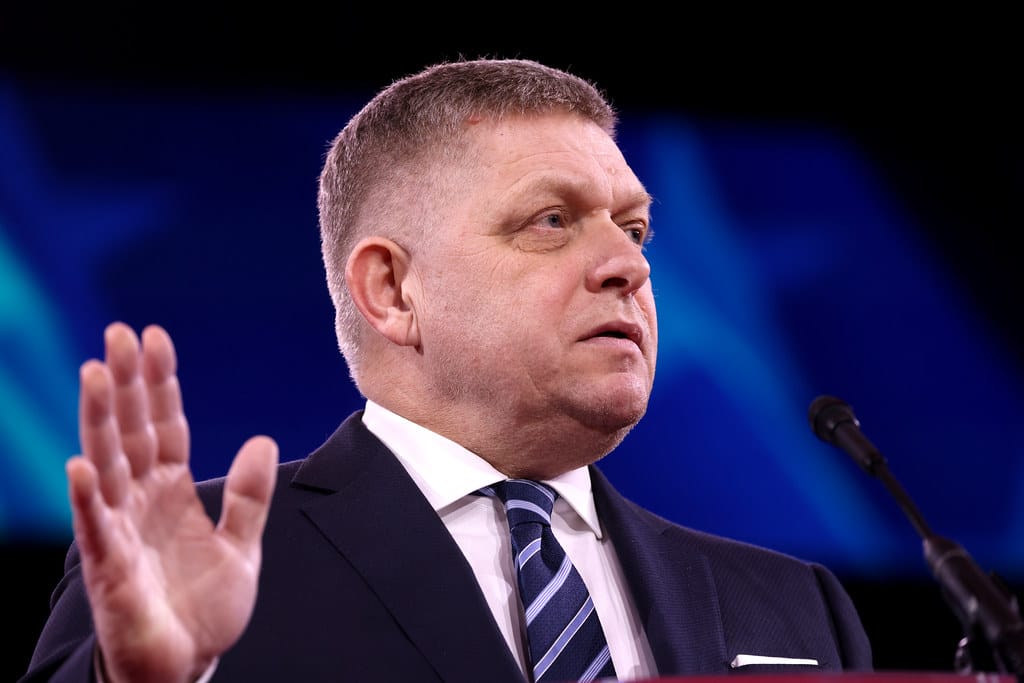
According to a Slovak analysis, Viktor Orbán’s departure will not only have consequences in Hungary but will also be felt in Slovakia, particularly in Robert Fico’s political room for maneuver. An article in Új Szó highlights that Fico partly built his EU strategy on Orbán’s political “protective umbrella,” and with its disappearance, Bratislava’s position may become more uncertain.
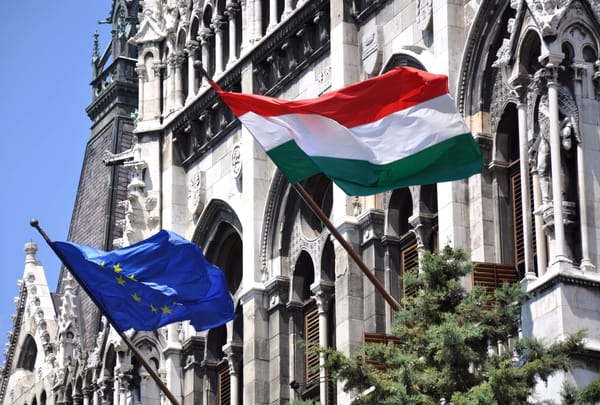
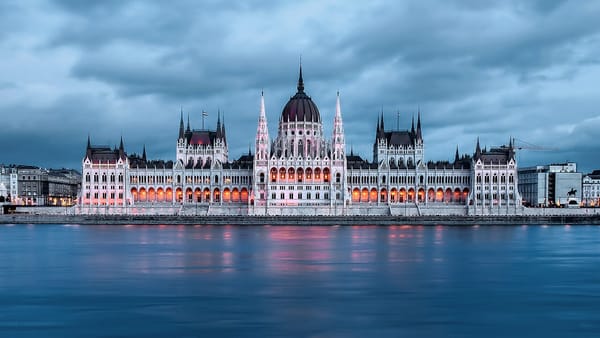
The starting point is clear: Hungary’s 2026 election was not a simple change of government, but the end of a 16-year political era. Following Viktor Orbán’s defeat, power was taken over by a pro-EU political force with a two-thirds majority. This represents not only a domestic political shift but a development of European significance, as Orbán had been one of the EU’s most prominent dissenting voices over the past decade. International media have also emphasized that his fall could remove one of the key obstacles to EU unity and reduce Russian influence within the bloc.
In this context, the argument of Új Szó becomes clearer: Orbán was not only a domestic political actor but also a regional reference point. This relationship was particularly important for Slovakia. Fico had previously indicated that, similarly to Budapest, he would be prepared to engage in tougher confrontations with the EU, and in some cases even “take over the baton.” In reality, however, his room for maneuver is far more limited. Slovakia’s economy is highly dependent on EU funds, which significantly constrains how far it can go in opposing Brussels.
The regional picture is even more complex. Over the past decade, several political currents have emerged in Central and Eastern Europe that emphasize sovereignty and adopt a more critical stance toward the EU. In Poland, during the rule of Law and Justice (PiS), similar conflicts with Brussels arose, although Warsaw maintained a consistently strong anti-Russian position. In Slovakia, Fico’s approach partly fits this pattern, but with far less institutional and political leverage than Orbán had.
For Brussels, this development is a double-edged sword. In the short term, internal blocking power may diminish, making unified action easier—especially in foreign policy and energy security. In the longer term, however, it cannot be ruled out that other actors in the region will attempt to fill the emerging political vacuum, whether in a more moderate or in a new form.
The economic dimension is equally important. From an investor perspective, EU unity is a key factor: regulatory stability, energy prices, and geopolitical risks all influence capital flows. According to another Reuters analysis, Hungary’s political shift could therefore open a new chapter for Europe not only politically but economically as well.
Orbán’s departure thus represents both risk and opportunity for Slovakia, Poland, and other Central European countries: they must redefine their position within the European Union.