Poland and the G20: Claiming a seat at the big table
Over the past three decades, Poland has undergone an unprecedented economic and political transformation: from the uncertain beginnings following the post-communist transition, it has grown into one of Europe’s key middle powers. Now it is seeking to secure positions that reflect this status in shaping the global economy.
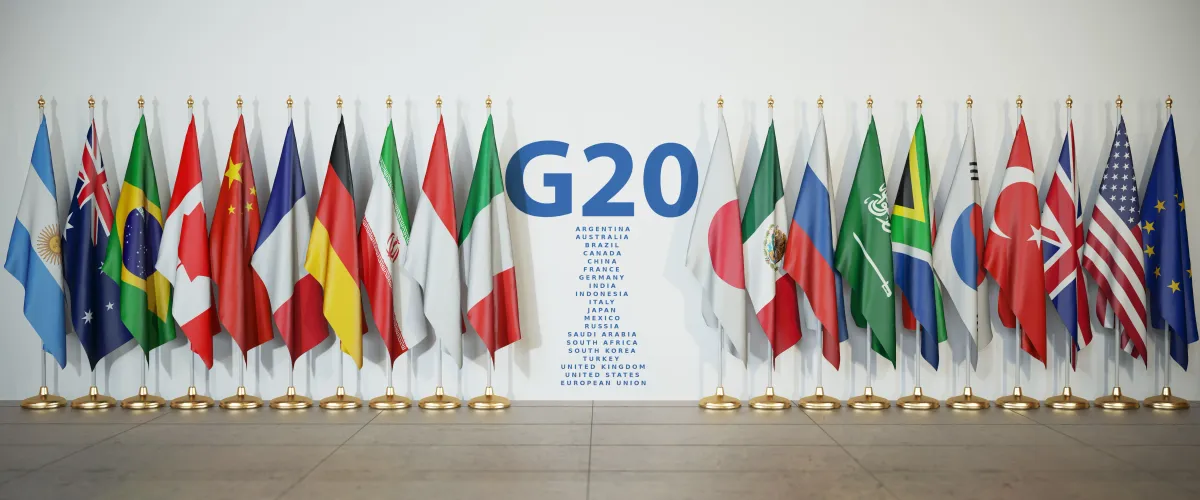
In 2025, Poland’s economy crossed the USD 1 trillion GDP threshold, placing it among the world’s twenty largest economies. This achievement is particularly significant because the region long remained a “periphery” compared with Western Europe, and its economic weight was not reflected in global political structures. Now, for the first time ever, a Central and Eastern European country has been given a direct seat at the G20 table — even if only as an observer for now.
The immediate trigger was that US President Donald Trump boycotted the South African G20 summit in 2025 and subsequently withdrew South Africa’s invitation to the 2026 meeting in Miami. Since the G20 has no rigid, legally defined membership system, Poland was able to fill the newly “opened” seat as an observer. Washington openly supported the move: according to US Secretary of State Marco Rubio, Poland “deserves to take its place in the G20,” recognising its successful democratic and economic development after the Cold War.
Economic model: domestic demand, EU capital and industrial modernization
Poland’s uninterrupted economic growth is the result of a fortunate and consistent combination of several factors:
• Substantial EU investment funds — since joining in 2004, Poland has been one of the EU’s largest net beneficiaries.
• Dynamic industry and services — the automotive sector, electronics, food processing and business service centres (SSC/BPO) have become key sectors.
• Strong domestic demand — steady wage growth and a young, active labour force ensured stable internal consumption.
• Investor-friendly institutions — international organisations (IMF, OECD) have consistently highlighted Poland’s fiscal discipline and predictable economic policy.
As a result, Poland’s GDP now surpasses that of Switzerland and has reached the level of medium-sized Western European states.
Could Central Europe finally appear on the global map?
Since the founding of the G20, no Central or Eastern European country has ever had its own seat at the leaders’ summit; the region’s interests were represented through the EU’s collective membership. This arrangement no longer reflects the region’s increasing economic weight. Poland’s invitation therefore goes beyond itself: it is a geopolitical signal that Central Europe is no longer just a buffer zone, but a real economic actor.
Polish experts — such as Marcin Klucznik of the Polish Economic Institute — argue that Poland is a natural candidate because its history is exemplary: it successfully completed the “catch-up” process from post-communist transition to developed-economy status.
The G20 is becoming increasingly difficult to operate: global power imbalances, American protectionism, the expansion of BRICS and Russia’s aggression often obstruct consensus. Some analysts believe the group’s relevance is declining, while alternative structures (e.g., BRICS+) are gaining strength. In this situation, Poland — which consistently supports open markets and global integration — could act as a stabilising force.
According to Dalibor Rohac (American Enterprise Institute), Warsaw can credibly represent both the EU and emerging regions that are still seeking their development path.
The G20 is deeply divided over the Russia–Ukraine war. Poland, however, has one of Europe’s most consistent anti-Russian stances, shaped by its historical experiences. Klucznik argues that this “Eastern perspective” brings important value: it highlights that economic development and political sovereignty are only sustainable if a country can resist external aggression.
Poland’s development path is considered exemplary by the IMF and the OECD: it shows that external capital, technological modernisation, democratic institutions and export-led industry together can ensure lasting convergence. This can serve as a model for other, lower-income countries as well.